
Keywords
humor
Matthew Arnold
democracy
comedy
culture
How to Cite
Abstract
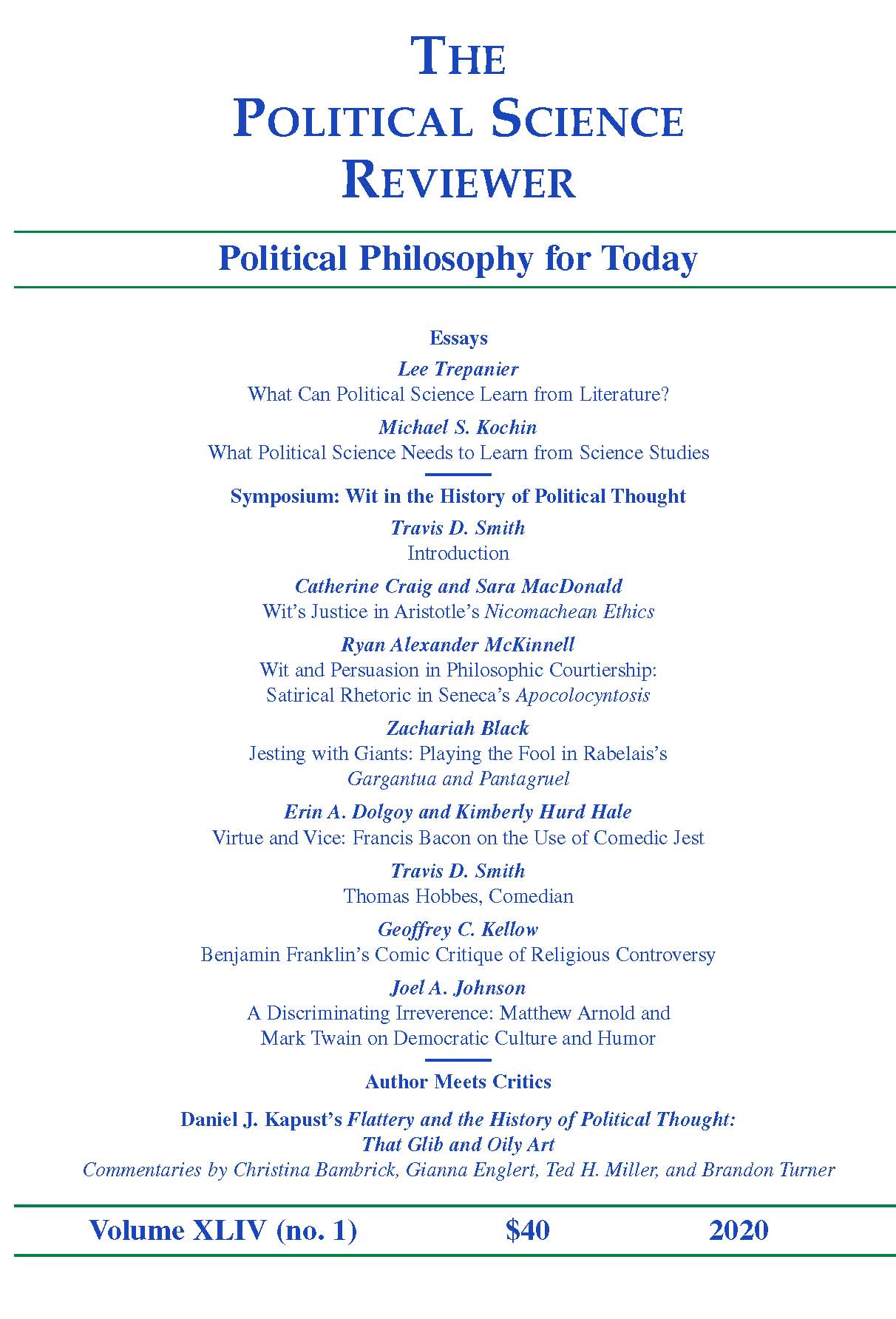
English critic Matthew Arnold considered Mark Twain’s work symptomatic of a cultural thinness in America, where basic liberty, equality, and prosperity might be in reach of ordinary people, but where nothing would prod genuine cultural development. Twain might be able to entertain a “Philistine” middle class, Arnold implied, but ultimately he could not contribute anything “interesting” to human civilization. Twain responded vigorously to this criticism, developing a conception of “discriminating irreverence” that confirms the value of democracy while prodding citizens to see the limits of that regime. After comparing and evaluating Arnold’s and Twain’s arguments, I discuss how this nineteenth-century debate can inform our understanding of contemporary democratic humor.